
Description

I. Features of the CO2 Laser Engraving Machine
-
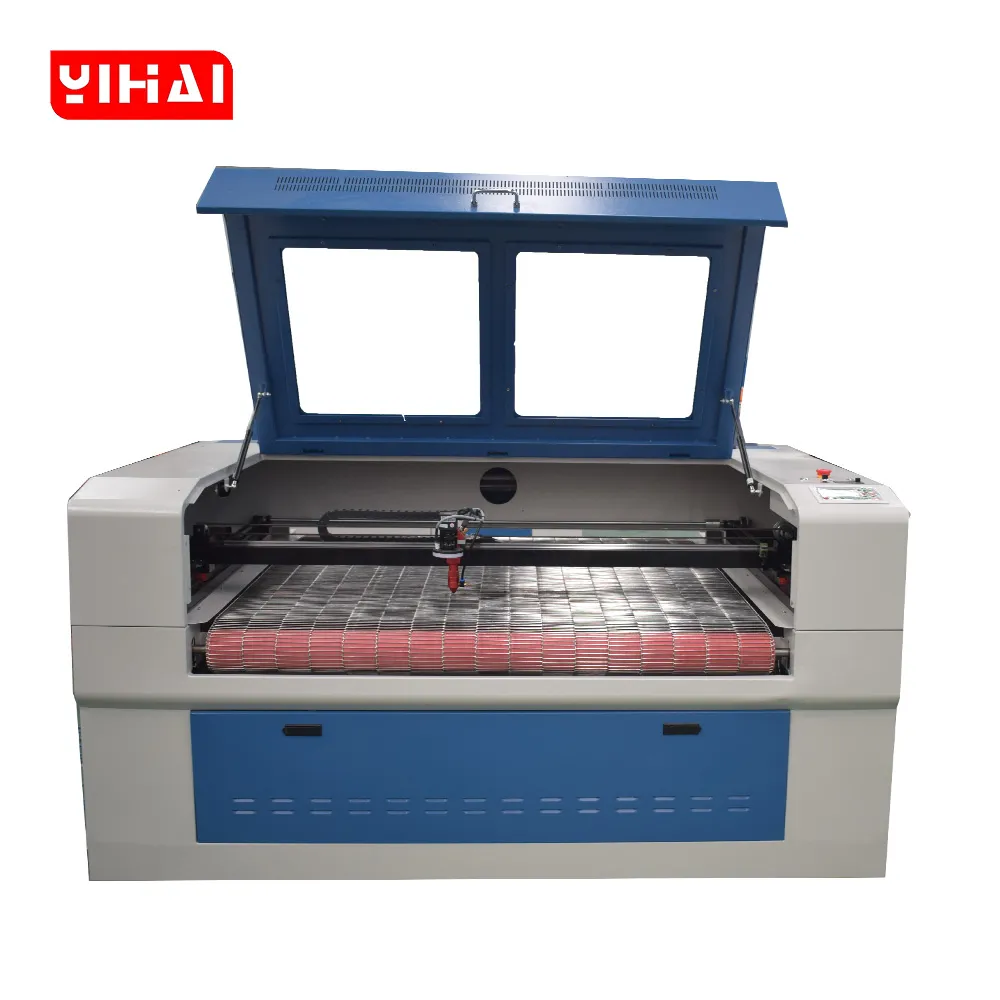
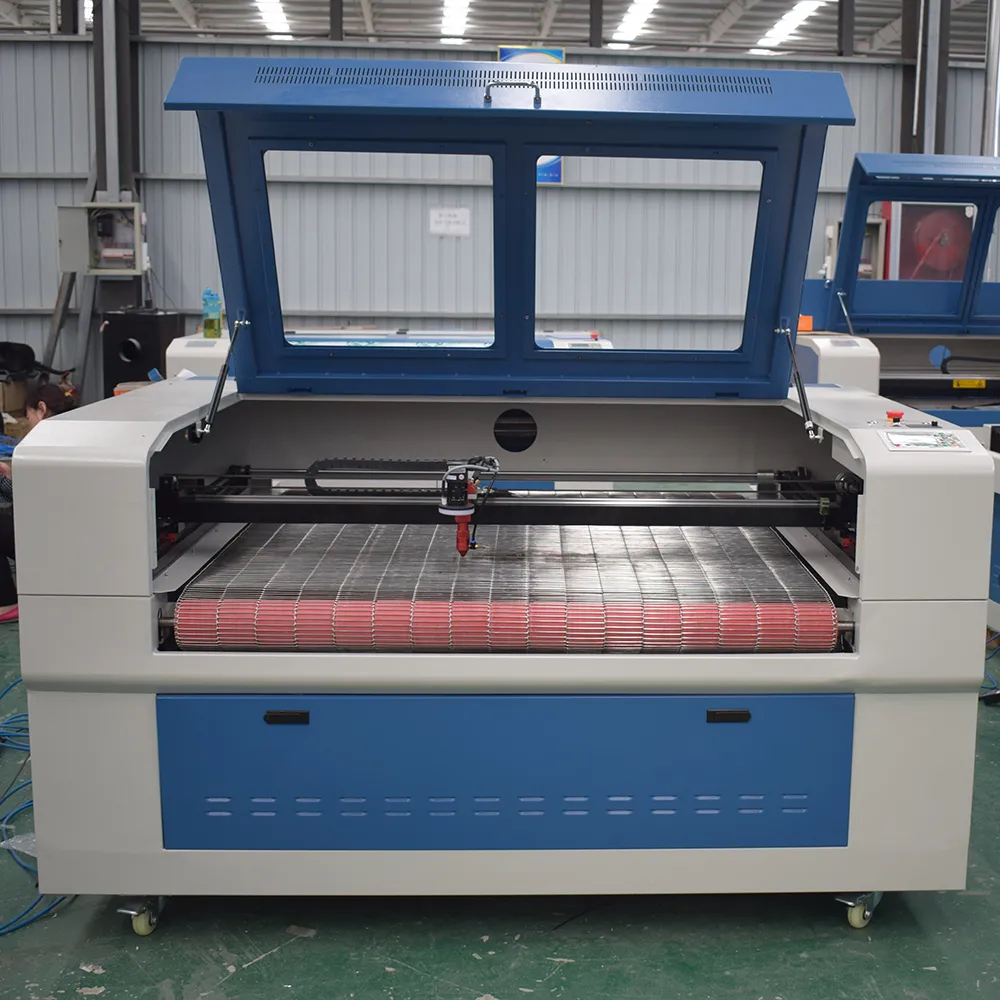
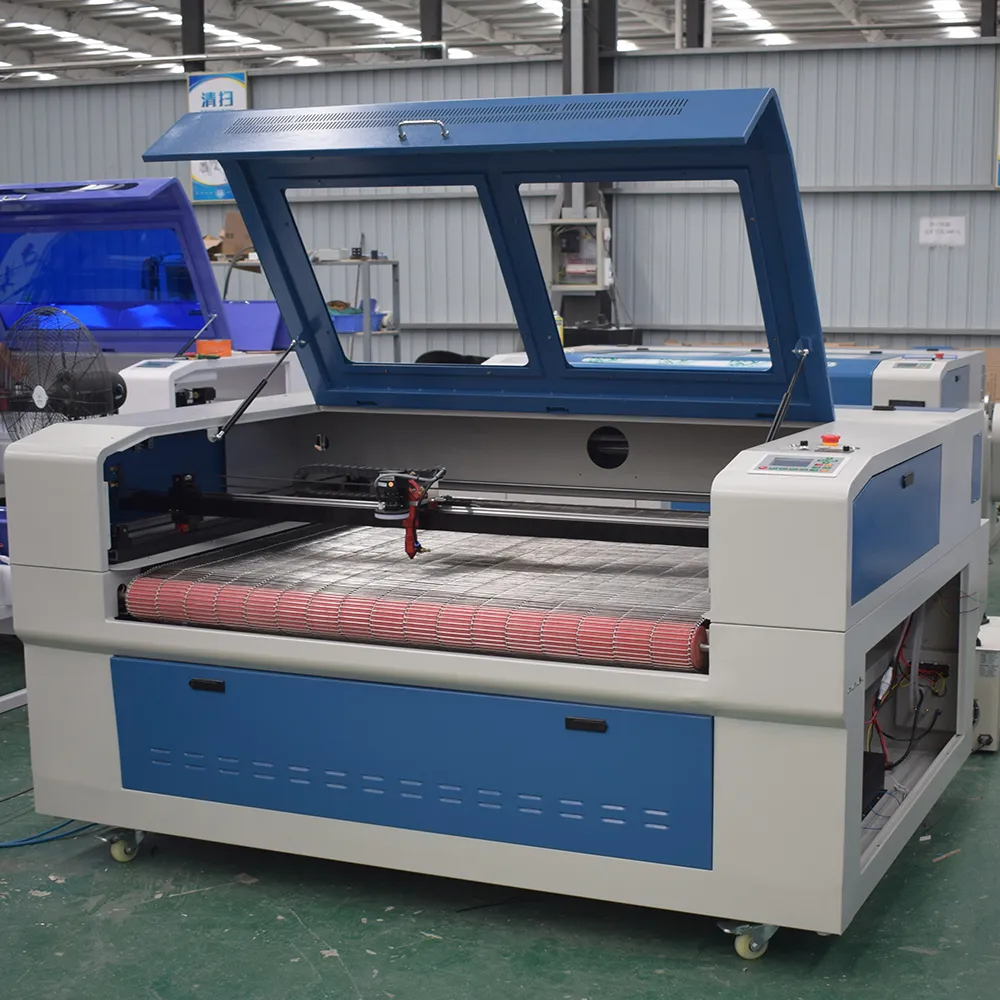
Equipped with a specialized dual-head asynchronous processing system, allowing two laser heads to work independently to double your manufacturing throughput.
-
The primary laser head features an integrated high-resolution CCD camera for real-time visual recognition and automatic contour extraction of printed graphics.
-
Both laser heads are equipped with independent Auto-Focus sensors, ensuring a consistent focal point across the entire large-format mesh belt platform.
-
Features an advanced automatic feeding mesh belt system, designed for the continuous processing of flexible roll materials without manual intervention.
-
Powered by a genuine RECI 130W (Peak 147W) CO2 laser tube, providing a robust beam for high-speed cutting and deep engraving on organic substrates.
-
The motion architecture is built with premium Taiwan HIWIN linear square rails, ensuring mechanical rigidity and zero-vibration travel during complex cycles.
-
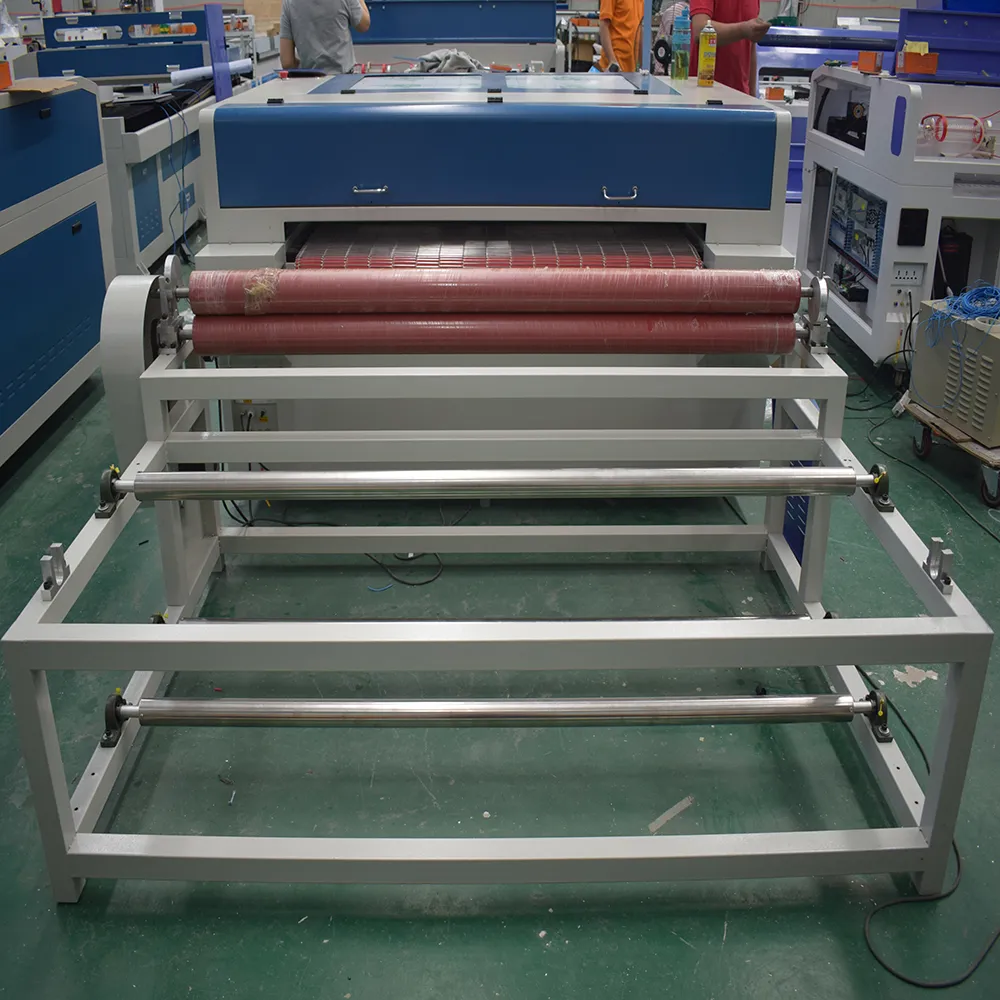
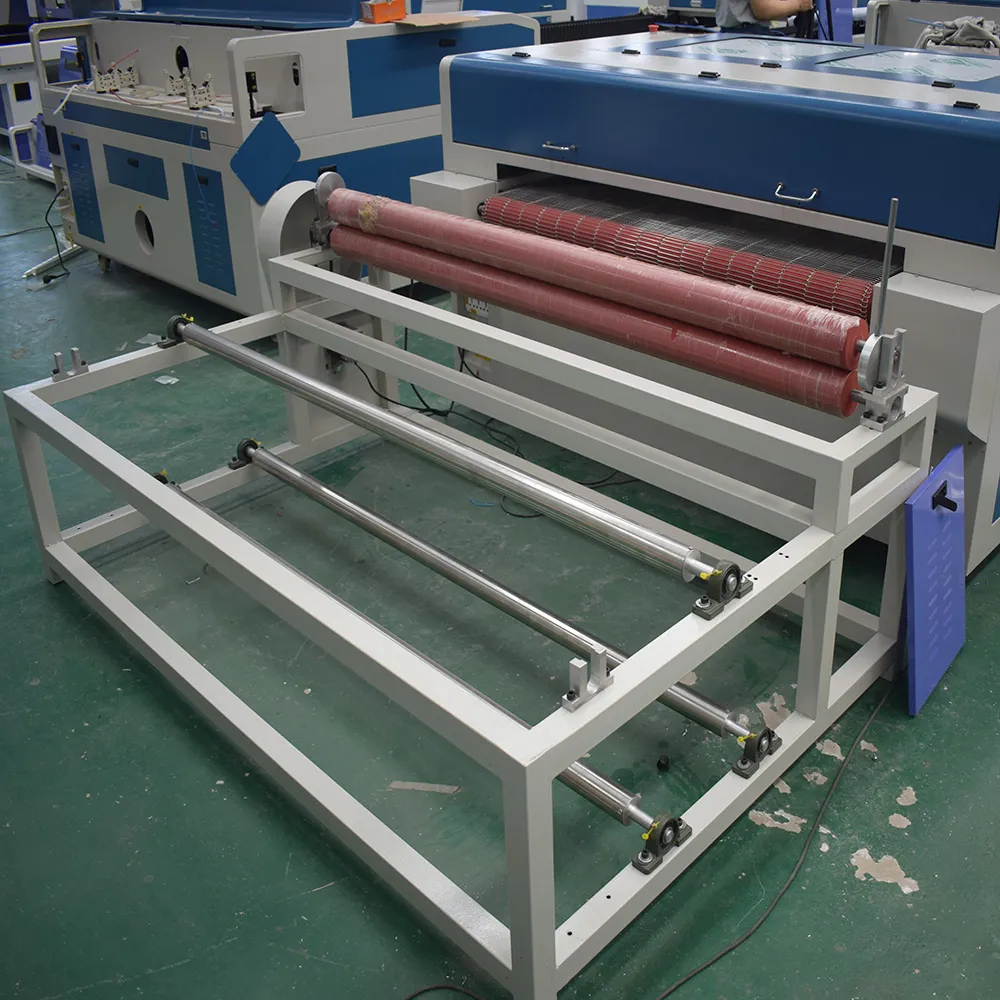
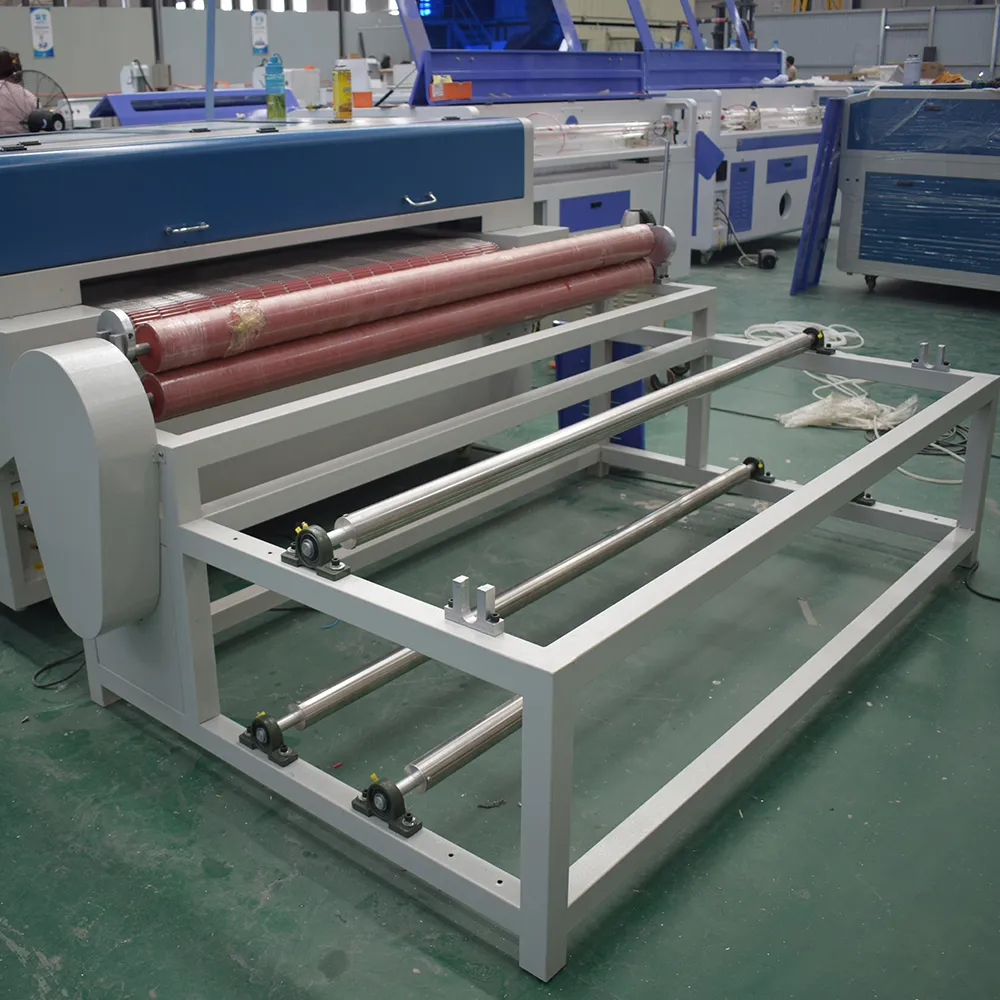
Includes an external roller feeding structure, specifically engineered to stabilize and guide heavy fabric rolls into the machine with minimal tension.
-
Utilizes the authentic Ruida RDC6442S control system, offering industrial-grade DSP logic to manage CCD vision data and dual-head motion simultaneously.
-
Transmission via high-tenacity industrial belts ensures smooth, quiet, and precise movement, maintaining a repetition accuracy of 0.02mm for batch production.
-
Designed with a 1300mm x 900mm (1390) working area, providing ample space for full-sized garment patterns, flags, and automotive interior components.
-
Integrated with professional air assist functionality, working with the included electromagnetic air pump to protect lenses and reduce material charring.
-
The heavy-duty industrial chassis is reinforced to prevent frame distortion during rapid acceleration, ensuring the machine remains a reliable tool for years.
-
Standard shipping package includes professional auxiliary systems such as a centrifugal exhaust blower and CW5000/CW5200 series industrial water chillers.
-
Supports a wide range of industrial file formats including PLT, DXF, BMP, JPG, and AI, compatible with the most popular CAD design software suites.
II. Advantages of the CO2 Laser Engraving Machine
-
The primary advantage of this CO2 Laser Engraving Machine is its asynchronous dual-head logic, which effectively doubles production capacity on a single frame.
-
By utilizing a top-mounted CCD camera, the machine can automatically compensate for fabric distortion or stretching, ensuring every cut matches the printed graphic.
-
The integration of a mesh belt and external rollers transforms the unit into a continuous production line, significantly reducing labor costs in material handling.
-
YIHAICNC’s choice of a 130W RECI tube provides a powerful performance that allows for rapid cutting of thick textiles and leather that lower-wattage machines struggle with.
-
The dual Auto-Focus system ensures that both heads maintain optimal precision, regardless of slight variations in the thickness or levelness of the rolled material.
-
Using HIWIN square rails ensures that the machine retains its positioning accuracy of 0.05mm over long-term industrial use, unlike budget round-rail alternatives.
-
This system serves as a highly efficient CO2 Laser Cutting Machine for roll materials, offering a cleaner, sealed edge that prevents fraying in textiles and synthetics.
-
The Ruida RDC6442S controller provides a stable and user-friendly interface that is fully compatible with professional nesting and pathing software like LightBurn.
-
Our specialized air assist design creates a protective air curtain at the nozzle, extending the life of the optics and keeping the focal lenses clear of smoke.
-
The external roller feeding structure allows for the handling of oversized material rolls, making the YH1390 a versatile tool for large-scale soft signage and upholstery.
-
The asynchronous head movement allows the machine to work on two different patterns simultaneously, providing maximum flexibility for diverse order requirements.
-
Designed for the 2026 industrial market, the YH1390 is engineered for maximum uptime, offering a sustainable and profitable solution for growing textile factories.
III. Technical Parameters
| Feature | Specification |
| Type | CO2 Laser Engraving Machine |
| Brand | YIHAICNC(YIHAI CNC) |
| Model | YH1390(Dual-Head System with Auto-Feeding) |
| Laser source | Glass cavity sealed CO2 laser with a wavelength of 10.6μm |
| Laser Brand | SLW/YL/EFR/RECI/OtherBrand |
| Laser Power | 150W(Customizable) |
| Total Power | <2.5KW |
| Working Table | Large-Format Automatic Feeding Conveyor Belt Platform |
| Working Area | 1300*900mm(Customizable) |
| Min Line Width | ≤0.15mm |
| Positon Accuracy | 0.05mm |
| Repetition Accuracy | 0.02mm |
| Driving System | Stepper Motor |
| Guide Rail | Hiwin Square Rails |
| Transmission Method | Belt Transmission |
| Control System | Ruida RDC6442S(Customizable) |
| Operating Voltage | 220v 50HZ-60HZ |
| Working Environment | Temperature 0-45°C Humidity 5%-95% (no condensation) |
| Graphic format support | PLT, DXF, BMP, JPG, AI |
| Option | Rotary Device Up-down Worktable Auto Focus CCD Camera Honeycomb Table Servo Motor |
IV. Key Components Description
|
| Dual Laser Head Configuration (Two Standard Laser Heads + CCD Camera + Auto-Focus) Function: The primary laser head is equipped with an integrated high-resolution CCD camera capable of real-time visual recognition and automatic contour extraction of printed graphics. The secondary laser head does not carry a CCD camera; however, both heads are equipped with auto-focus modules, allowing them to execute engraving and cutting tasks asynchronously to boost processing efficiency. |
| Dual Laser Head Configuration (Dual Standard Laser Heads + CCD Camera + Auto-focus) — Close-up |  |
| Dual Laser Head Configuration (Dual Standard Laser Heads + CCD Camera + Auto-focus) — Close-up |
| Automatic Conveyor Belt Platform Function: Equipped with an advanced automatic conveyor belt platform, enabling the seamless transition of flexible materials from the loading rack to the cutting zone without the need for manual intervention. |  |
| External Roller Feeding Structure Function: The specially designed external roller feeding structure reliably guides heavy fabric rolls into the machine while minimizing material tension. |
| High-Performance, High-Precision CO2 Laser Tube Function: The core power source, delivering a stable 10.6μm beam. Designed specifically for deep cutting and fine engraving on organic substrates, it features an industrial-grade lifespan and consistent energy output. | |
| DSP Control Panel and Emergency Stop Button Function: Equipped with an intuitive LCD screen, allowing for real-time monitoring of current speed and power parameters. Industrial-grade mechanical buttons provide clear tactile feedback, while the emergency stop button enables instantaneous power cutoff and machine shutdown in urgent situations, thereby maximizing operator safety. |
V. Applicable Materials
The YH1390 CCD CO2 Laser Engraving Machine is an expert at processing flexible and roll-based substrates. It excels at cutting and engraving textiles, sublimation fabrics, and genuine leather. It is also highly effective for synthetic leather (PU/PVC), neoprene, and industrial felts. Additionally, the large-format bed allows for the processing of paper rolls, thin plastics, non-woven fabrics, and lightweight films, providing a comprehensive solution for any industry handling continuous soft materials.

VI. Applicable Industries and Future Prospects
The Garment and Fashion Industry stands as the primary market for this advanced YH1390 model. In 2026, the demand for “Fast Fashion” and personalized apparel requires manufacturers to move from digital design to finished cut pieces within hours. This CO2 Laser Engraving Machine allows factories to automatically recognize sublimation-printed fabric patterns and cut them with millimeter precision. The CCD system eliminates the manual labor involved in aligning patterns, while the dual-head system ensures that large orders for sportswear, swimsuits, and custom uniforms are completed in half the traditional time.
In the Automotive Interior and Upholstery sector, the machine is used for producing large car seat covers, floor mats, and interior trim components. The 1390’s large-format bed and auto-feeding system are ideal for processing long rolls of synthetic leather and heavy upholstery fabrics. As automotive designs become more intricate, the ability of the CO2 Laser Cutting Machine to produce complex decorative perforations and precise edges becomes a vital competitive advantage. Future prospects in this sector include the use of recycled textiles, which benefit from the non-contact nature of laser processing to maintain material integrity.
The Advertising and Soft Signage Industry utilizes the YH1390 for the production of banners, flags, and trade show displays. Digital printing on fabric is a massive growth market, and a CCD-equipped laser is the bridge between a digital file and a physical product. By automating the contour cutting process, sign shops can significantly increase their throughput and offer more competitive pricing for custom fabric products. The prospect of integrating AI-driven nesting with the CCD vision system will further reduce material waste, making the YH1390 series a sustainable choice for environmentally conscious businesses.
Looking toward the future, the Smart Manufacturing and Digital Fabrication movement is driving the need for more automated workshop tools. Small-to-medium enterprises (SMEs) are increasingly adopting on-demand production models to reduce inventory costs. The YIHAICNC auto-feeding series is positioned to be the backbone of these modern workshops, offering the industrial-grade reliability needed for 24/7 production with the flexibility to adapt to new, sustainable materials. As laser technology continues to evolve, the YH1390 remains a future-ready asset that ensures precision and efficiency in a global manufacturing landscape.
VII. Safety Precautions and Guidelines
-
Laser Radiation Safety: Always wear certified 10.6μm protective goggles. The laser beam is invisible and can cause immediate, permanent eye injury upon contact.
-
Ventilation Requirements: Never operate the machine without the centrifugal exhaust fan running. Processing textiles and leather produces smoke and fumes that must be vented outside.
-
Moving Part Safety: Keep hands, loose clothing, and jewelry away from the conveyor mesh belt and the auto-feeding rollers while the machine is in operation.
-
Fire Prevention: Never leave the machine unattended during a job. Keep a fire extinguisher nearby, as some synthetic fabrics can ignite if the power settings are incorrect.
-
Cooling System Check: Verify that the industrial chiller is active and the water flow is steady before firing the laser. Running without cooling will cause the RECI tube to crack.
VIII. Frequently Asked Questions (FAQ)
Q1: How does the CCD camera system improve the accuracy of my fabric cutting?
The CCD camera system on the YH1390 CO2 Laser Engraving Machine is a revolutionary tool for the textile industry. Standard laser machines rely on manual positioning, which is incredibly difficult when dealing with flexible fabrics that can stretch or distort during the printing process. Our top-mounted CCD camera captures the entire working area and uses advanced vision algorithms to identify registration marks or the actual outlines of the printed patterns. The software then automatically adjusts the cutting path to match the real-time position and shape of the fabric on the mesh belt. This ensures that every cut is perfectly aligned with the graphics, drastically reducing waste and ensuring a professional finish for every garment or signage piece.
Q2: What is the specific benefit of the “Asynchronous Double Head” system?
In a standard double-head machine, both heads move together and cut the same pattern at the same time. While this is great for identical parts, it lacks flexibility. The “Asynchronous” system in the YH1390 allows the two laser heads to move independently. This means you can cut two different shapes simultaneously on the same bed, or nest your parts more efficiently to save material. For YIHAICNC customers, this is like having two machines in one frame. It effectively doubles your production speed for large batches and corporate orders without requiring additional floor space or a second operator, providing a massive boost to your workshop’s daily return on investment.
Q3: Is the RECI 130W power level suitable for both engraving and heavy cutting?
The RECI 130W (Peak 147W) tube is considered a “high-performance” power level that offers an outstanding balance for diverse workshops. For engraving, it provides a stable beam that can etch fine details into wood or leather at high speeds. When used as a CO2 Laser Cutting Machine, it has the raw power to slice through thick textiles, industrial felt, and even 15mm-20mm acrylic in a single pass. This versatility is essential for the 1390 format, as it allows the operator to switch from delicate lace cutting on fabric to heavy-duty signage cutting without changing the laser source. The RECI brand is also known for its long operational lifespan, ensuring your machine remains a reliable production tool for years to come.
Q4: How does the automatic mesh belt and external roller system handle long material rolls?
The auto-feeding system on the YH1390 CO2 Laser Engraving Machine is designed for continuous, industrial-scale production. The external roller structure supports the weight of large fabric or leather rolls and guides the material smoothly into the machine. The mesh belt platform then uses high-torque stepper motors to move the material forward with millimeter precision. This allows the machine to process a design, feed the next section of the roll automatically, and continue cutting. This “infinite length” processing capability is what makes the YH1390 the choice for automotive upholstery and soft signage, where projects are often much longer than the machine’s physical bed, ensuring a seamless and efficient workflow.
Q5: What are the maintenance requirements for a CCD-equipped auto-feeding machine?
Maintenance for the YH1390 focuses on keeping the motion system and the optics clean. Because textile processing produces fine lint and dust, we recommend cleaning the mesh belt and the HIWIN square rails daily with compressed air or a brush. The reflective mirrors and the focal lenses of both heads should be cleaned with high-purity isopropyl alcohol to prevent smoke residue from burning into the coatings. Additionally, the CCD camera lens should be wiped with a soft tissue to ensure the visual recognition remains sharp. You should also replace the distilled water in your industrial chiller every 2 months to prevent mineral buildup inside the RECI tubes, ensuring consistent power output for all your industrial cutting tasks.
Q6: Is the Ruida RDC6442S controller compatible with professional design software?
Absolutely. The Ruida RDC6442S is the industry standard for high-end CO2 Laser Engraving Machine control. It is fully compatible with LightBurn, which is highly favored for its intuitive interface and advanced path optimization tools. It also comes with the free RDWorks V8 software, which includes plugins for AutoCAD, CorelDRAW, and Adobe Illustrator. This software ecosystem allows YIHAICNC customers to manage the CCD vision parameters, set up asynchronous dual-head logic, and handle continuous feeding cycles all within a single design environment. This compatibility ensures that your existing design workflow is not only preserved but significantly enhanced by the professional, automated features of this flagship 1390 model.

Phạm Quốc Bảo 🇻🇳 (Ho Chi Minh City, Vietnam) –
We bought the 1390 CCD dual-head auto-feeding machine for our garment factory in Ho Chi Minh City. Our main product is custom-printed t-shirts and sportswear, and we needed to cut the printed outlines accurately. The CCD camera on the primary head reads the printed contour and adjusts the cut path automatically—this has eliminated the misalignment we used to get when fabric stretched during feeding. The dual-head setup doubles our output. One head cuts the main pattern while the second head engraves size labels directly onto the fabric, which saves a separate labeling step. The 130W RECI tube handles thick cotton and even some denim. We’ve been running it for about four months, six days a week. The only thing I’d mention is that the CCD calibration needs to be re-done if you change the material color significantly—dark fabric reflects differently than light fabric. Once we figured that out, it’s been smooth.
Alex_Zhang –
Bảo, the CCD calibration note about material color is very useful—we’ll add that to our setup guide. Dark fabrics do reflect less light back to the camera, and a quick recalibration when switching between light and dark materials is the right practice. Engraving size labels directly onto fabric is a clever use of the second head. Thanks for sharing your workflow. If you ever want to run a test on a new fabric type, send us a sample and we can suggest starting parameters.